
Back pain is one of the most common health issues affecting people of all ages. Long sitting hours, poor posture, stress, and limited physical activity are often discussed as factors that may be associated with back discomfort.
While medications may provide temporary relief, many people are now turning to natural therapies like acupressure for back pain relief to manage discomfort safely and effectively.
Acupressure is easy to learn, gentle on the body, and works by applying pressure to specific points that relax tight muscles and relieve pain.
In this guide, we will explore effective acupressure points for both upper and lower back pain, offering you practical techniques to ease discomfort.
What Is Acupressure and How Does It Help Back Pain?
Acupressure is a simple technique that involves applying gentle pressure to specific points on the body to ease pain and help you feel better.
Think of it like giving yourself a targeted massage on certain points that are linked to other parts of your body.
When you press these spots, your body responds by releasing tension and reducing pain naturally.
The best part?
You don’t need needles like acupuncture – just your fingers or thumbs.
This technique has been a key part of Traditional Chinese Medicine for thousands of years, but it’s more than just an old tradition.
Today, modern research confirms that acupressure really works to help ease back pain and body aches.
Benefits of Acupressure for Back Pain
Acupressure offers a powerful and natural way to manage back pain. Modern research confirms that this technique provides several key health advantages:
- Natural Pain Relief: By stimulating specific points, the body releases endorphins – natural chemicals that block pain. A study published in the BMJ (formerly British Medical Journal) found that acupressure reduced disability from chronic back pain by 89% compared to standard physical therapy.
- Reduced Muscle Stiffness: Applying pressure increases blood circulation to tight areas, helping muscles relax. Research in the Journal of Advanced Nursing and similar nursing trials shows that acupressure significantly reduces pain severity and physical fatigue in those suffering from chronic back issues.
- Better Sleep Quality: Back pain often ruins sleep, but acupressure helps calm the nervous system. A secondary analysis of a randomized controlled trial published via PubMed Central concluded that acupressure is an effective non-drug treatment for improving sleep and reducing insomnia in adults with chronic low back pain.
- Lower Stress Levels: Acupressure helps lower cortisol (the stress hormone). Clinical trials have shown that targeting specific points like “Yintang” or “Heart 7” can lower heart rates and help you feel more relaxed while managing physical discomfort.
Most Effective Acupressure Points for Back Pain Relief
While there are many acupressure points that can help with back pain, we’ve highlighted the most effective and easy-to-locate points that you can practice at home.
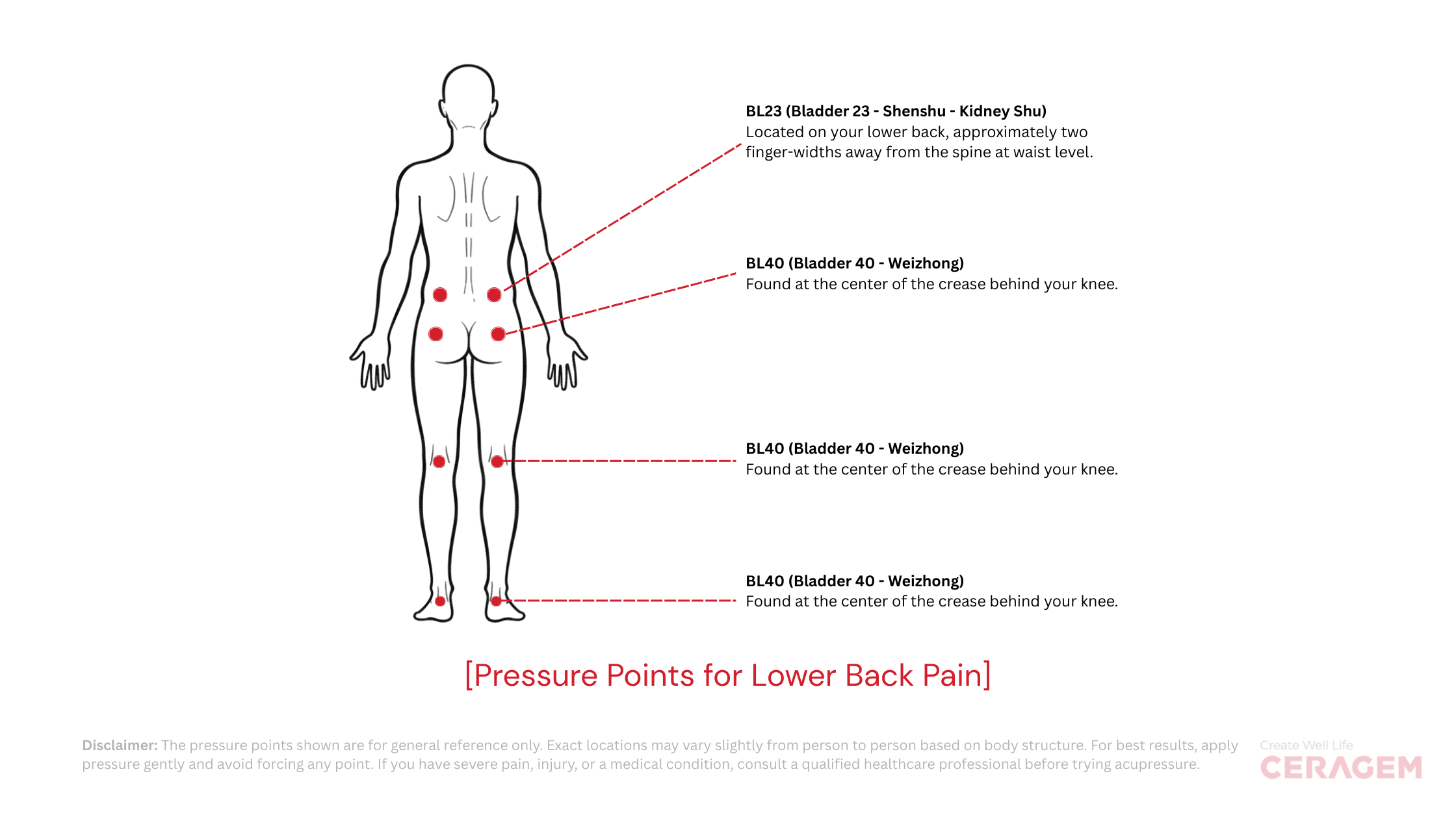
Acupressure Points for Lower Back Pain
BL23 (Bladder 23 – Shenshu – Kidney Shu): Located on your lower back, approximately two finger-widths away from the spine at waist level. Apply firm pressure with your thumbs for 1-2 minutes while breathing deeply. Clinical studies have shown that acupressure at BL23 significantly reduces postpartum and chronic lower back pain intensity.
BL40 (Bladder 40 – Weizhong): Found at the center of the crease behind your knee. Apply steady pressure for 1 minute on each leg. A systematic review identified BL40 as one of the most frequently used and effective acupoints for lower back pain relief.
GB30 (Gallbladder 30 – Huantiao): Located on your buttocks, about midway between the hip bone and tailbone. Use your thumb or knuckle to apply deep pressure for 2 minutes per side. Research shows GB30 is among the most effective points for treating lower back pain, sciatica, and hip discomfort.
BL60 (Bladder 60 – Kunlun): Found between your ankle bone and Achilles tendon. Gently press this point for 1 minute per foot. Studies demonstrate BL60 is particularly effective for chronic lower back pain and improves overall function.
Acupressure Points for Upper Back Pain
GB21 (Gallbladder 21 – Jianjing – Shoulder Well): Located on the highest point of your shoulder, midway between your neck and shoulder edge. Pinch this point firmly for 1-2 minutes. Research confirms GB21 acupressure effectively reduces neck and shoulder pain, muscle tension, and related disability.
Note: Avoid during pregnancy as it can stimulate contractions.
LI4 (Large Intestine 4 – Hegu): Found in the webbing between your thumb and index finger. Apply firm pressure for 1-2 minutes per hand. Despite being far from your back, studies show this point influences upper body pain pathways and reduces tension throughout the body.
SI3 (Small Intestine 3 – Houxi): Located on the edge of your hand below the pinky finger. Press this point for 1 minute per hand. Clinical trials demonstrate SI3’s effectiveness for acute neck pain and stiffness, while research shows it can increase pain threshold across the body, particularly benefiting those with desk work-related discomfort.
BL10 (Bladder 10 – Tianzhu): Found at the base of your skull, about one inch outside the spine. Apply gentle upward pressure for 1-2 minutes. Studies confirm that acupressure at BL10 effectively treats neck pain, upper back tension, and related symptoms with an 89.66% effectiveness rate.
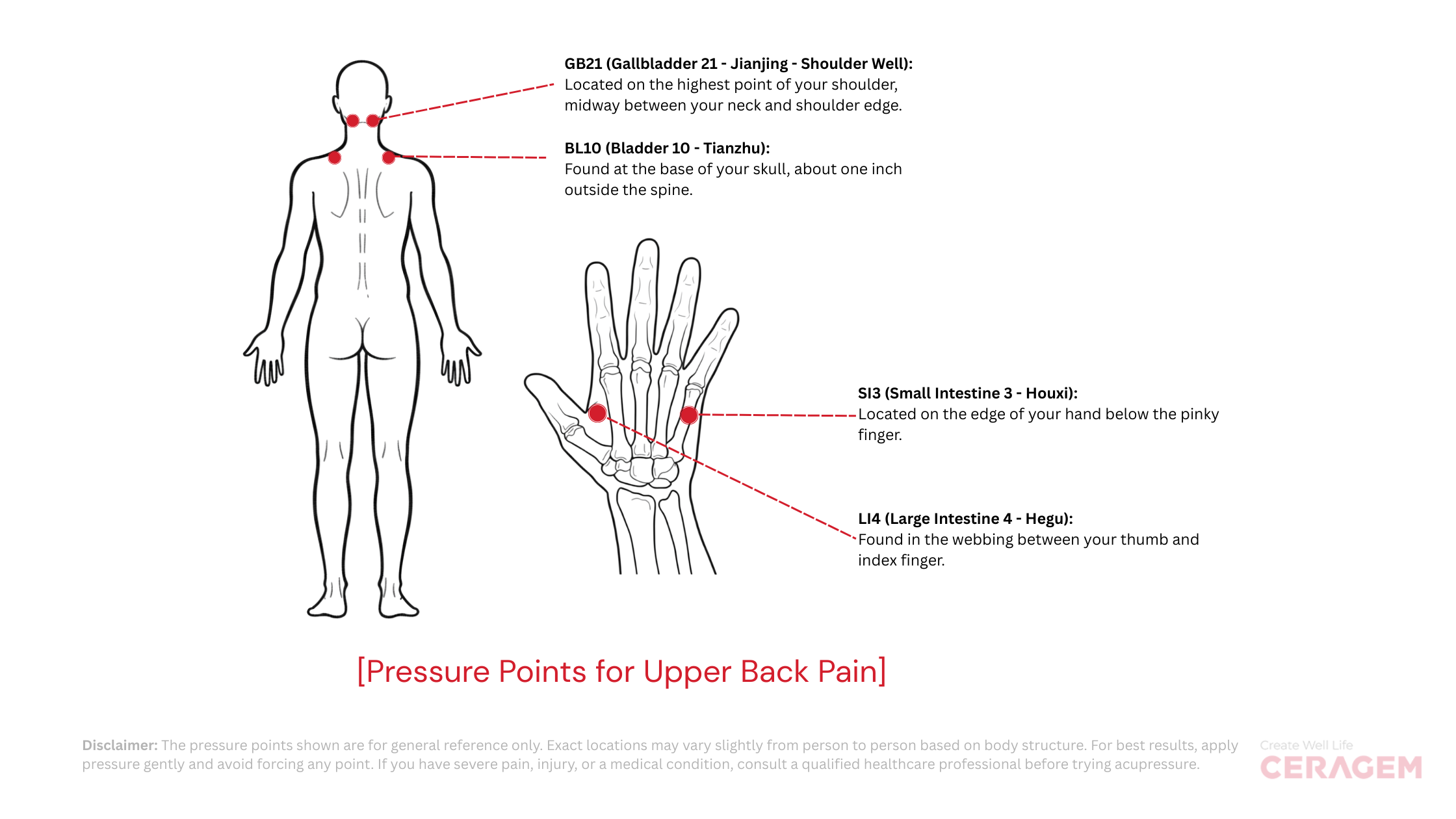
Applying steady pressure for 30–60 seconds on each point can help reduce pain over time.
How to Practice Acupressure Correctly?
Apply firm but comfortable pressure – you should feel sensation without sharp pain. Use your thumb, fingers, or knuckles depending on the point location.
Press steadily or use small circular motions for 30 seconds to 2 minutes per point.
Breathe deeply and relax during application.
Practice 2-3 times daily for chronic pain, or as needed for acute discomfort. Start with gentle pressure and gradually increase as you become familiar with your body’s response. Consistency yields better results than intensity.
Complementary Practices for Back Pain Relief
Along with acupressure, several complementary practices can support overall back comfort and mobility.
Gentle stretching, yoga, and mindfulness-based relaxation techniques are often included in daily routines to help ease muscle tension and encourage better posture.
Thermal massage therapy is another supportive approach, combining soothing heat with massage to relax muscles and helps in body pain.
Note: Acupressure may not be suitable for everyone. It should be avoided or practiced only under professional guidance in cases of severe spinal injuries, fractures, infections, recent surgery, or conditions involving numbness or radiating leg pain. Pregnant individuals should consult a qualified healthcare professional before trying acupressure.
Final Thoughts
Acupressure offers a powerful, natural approach to managing upper and lower back pain without medications or invasive procedures.
By learning and consistently applying these targeted pressure points, you can take an active role in your pain management journey.
Remember that acupressure works best when practiced regularly and combined with healthy lifestyle habits like proper posture, regular movement, and stress management.
When combined with proper posture, regular stretching and accurate back massages. It can greatly improve daily comfort. These practices relax muscles, support a healthier spine, and enhance overall back wellness.
Related Post: Introduction & Importance of Spine
Medical Disclaimer
This content is for informational purposes only and does not constitute medical advice. Always consult a qualified healthcare professional before starting any treatment, especially if you have a medical condition or ongoing pain.
Authors & Contributors

The Editorial Team at Ceragem India is a group of content professionals, researchers, and reviewers responsible for maintaining the quality and integrity of information published on the Ceragem India blog. Our focus is on delivering accurate, well-structured, and responsible content related to wellness, lifestyle, health awareness, and organizational initiatives.

Dr. Ashish Kumar Shrivastav is a Senior Consultant in Neurosurgery with over 34 years of professional experience in the field. He holds an MBBS (1986), MS in General Surgery (1990), and M.Ch in Neurosurgery (1994), and is recognized for his strong commitment to high-quality neurosurgical care.
The awareness of back pain Was a awesome content I like very much that text was good I feel so good thank you sir God bless you