
Waking up with a stiff back has almost become normal these days, right? Whether it’s long hours at a desk, scrolling on your phone, or just daily stress back pain quietly creeps into our lives.
But here’s the thing most people ignore: your sleeping position for back pain can either help you recover… or make things worse overnight.
In this blog, we’ll break down the best sleeping positions for different types of back pain, simple pillow adjustments that actually work, and a few practical tips you can start using tonight.
Why Sleep Position Matters for your Back
Your spine isn’t meant to stay flat or twisted for hours. When you sleep in the wrong posture, it puts uneven pressure on your back muscles and joints.
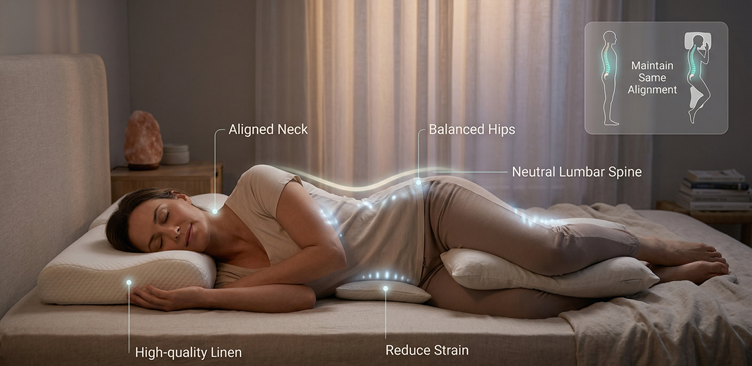
A good sleep posture for back pain keeps your spine in a neutral position not too arched, not too flat. Think of it as maintaining the same alignment you’d have while standing straight.
Even small changes in how you sleep can reduce strain and help your muscles relax properly overnight.
Best Sleeping Positions by Pain Location
Lower Back Pain (Lumbar Area)
Lower back pain is usually caused by excess pressure on the lumbar spine, especially after long hours of sitting or improper lifting. Understanding the common causes of lower back pain in women can help you address the issue more effectively.
When you sleep, your goal is to reduce that pressure and support the natural curve of your lower back.
Sleeping on your back works well because it distributes your weight evenly and helps keep your spine aligned. A pillow under your knees helps flatten the lower spine gently and relieves tension.[1]
If you sleep on your side, alignment becomes important. Without support, your upper leg tends to drop forward, pulling your spine out of position. Keeping a pillow between your knees prevents that twist and keeps your hips stable.
According to the Spine Health Foundation Sleeping on your stomach is the sleep position that puts the most pressure on your spine because it counters the natural curves of your spine and forces you to turn your neck.[2]
This can cause neck and upper back pain.
💡Pillow Tip:
Think of your pillow as a support tool, not just comfort. Under the knees (back sleeping) or between the legs (side sleeping) small adjustment, big relief.
Middle Back Pain (Thoracic Area)
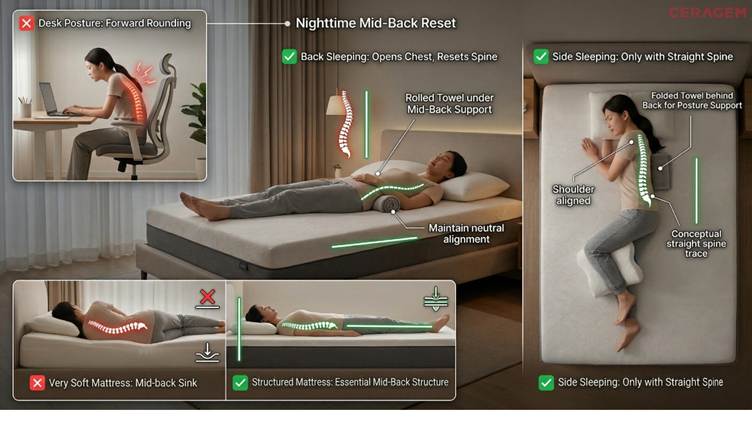
Middle back pain commonly develops due to long hours spent in a slightly hunched posture, especially during desk work or screen use.
At night, your goal is to undo that forward rounding posture.
Sleeping on your back helps open up your chest and reset your spine. If your mattress feels too flat, placing a small rolled towel under your mid-back can give gentle support and prevent your spine from sinking inward.
Side sleeping can also work but only if your spine stays straight. If your shoulder collapses forward or your back curves, it can make things worse instead of better.
Also, very soft mattresses are not your friend here. They may feel comfortable initially, but they don’t give your mid-back the structure it needs.
💡Pillow Tip:
A small support behind your upper or mid-back (even a folded towel) can help maintain posture while you sleep especially if you tend to roll.
Upper Back Pain (Neck & Shoulder Area)
Upper back pain is less about your back… and more about your neck alignment.
Most people focus on the mattress, but the real issue is usually the pillow.
If your pillow is too high, your neck bends forward. Too low, and it drops backward. Both positions strain your upper spine for hours.
The ideal setup keeps your neck in a neutral position like it is when you’re standing straight.
If you sleep on your side, your pillow should fill the gap between your shoulder and neck. If you sleep on your back, it should support the natural curve of your neck not push your head forward.
And stacking multiple pillows? That’s one of the fastest ways to worsen upper back pain.
💡Pillow Tip:
Don’t choose a pillow based on softness choose it based on height and support. Your neck should feel “held,” not pushed.
Sleeping Positions for Back Pain During Pregnancy
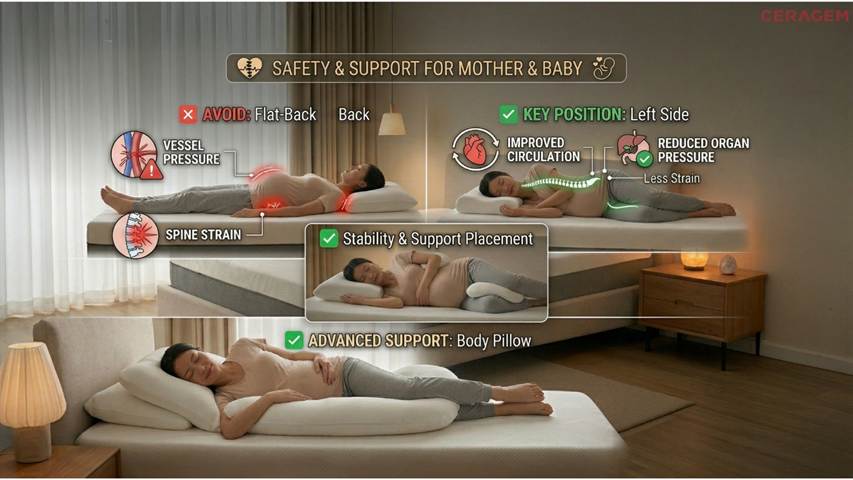
Sleep during pregnancy isn’t just about comfort it’s about safety and support for both you and your baby.
The most recommended position is sleeping on your side (SOS), especially the left side. This helps improve circulation and reduces pressure on your spine and internal organs.
But let’s be honest staying in one position all night isn’t easy.
That’s where support makes a huge difference.
Using a body pillow can help you stay comfortable without constantly adjusting. It supports your belly, keeps your hips aligned, and prevents you from rolling onto your back.
Placing a pillow between your knees and a small one behind your back can also add stability.
One important thing to avoid is sleeping flat on your back, as it can increase pressure on blood vessels.
Most importantly don’t chase perfection.
Your comfort matters. If something feels right and doesn’t cause strain, that’s what works for you.
And of course, if the pain becomes frequent or intense, it’s always best to consult your gynaecologist.
Mattress & Pillow Tips That Actually Make a Difference
You can fix your sleeping position perfectly… but if your mattress isn’t supporting you, it won’t matter much.
A medium-firm mattress is usually the safest choice. It keeps your spine supported without creating pressure points.
- Too soft → your body sinks and your spine curves
- Too hard → your body stays stiff and pressure increases
Your pillow matters just as much.
Instead of picking the softest one, focus on whether it keeps your neck aligned with your spine. That’s what actually prevents pain.
Also, if your pillow has lost its shape, it’s probably not supporting you anymore even if it feels comfortable.
What about adjustable beds?
They can help by slightly elevating your legs or upper body, which reduces pressure on the spine. But since they’re not very common in India, a simple wedge pillow can give you similar support without the cost.
Conclusion
The right sleeping position for back pain is less about finding one “perfect” posture and more about keeping your spine properly aligned and supported. Small adjustments like using the right pillow placement or slightly changing your sleeping position can make a noticeable difference over time. Whether your pain is in the lower, middle, or upper back, understanding what your body needs is key to better recovery during sleep.
It’s also important to remember that your mattress and pillow play an equally important role in maintaining proper support throughout the night. Consistency in these small habits can gradually improve both your sleep quality and overall back health.
If you’re wondering can back pain be cured permanently, it’s important to focus on long-term lifestyle and posture corrections.
However, if your pain continues or becomes more frequent, it’s always best to consult an orthopaedist and get the right guidance. Taking care of your sleep posture today can help you wake up feeling more comfortable and pain-free tomorrow.
References:
Ceragem my good.life. Ingres my body pain
Tq ceragem family
Thanks for breaking down how sleep position can impact back pain—especially the part about avoiding flat sleeping positions and using supportive pillows. I’ve been struggling with morning stiffness, and this article reinforced the importance of adjusting my setup rather than just hoping for better sleep. It’s great to see practical tips that actually make a difference.
सोने की सही मुद्रा सिर्फ अच्छी नींद के लिए ही आवश्यक नहीं हैं बल्कि इससे पीठ दर्द और रीढ़ को लंबे समय तक क्रियाशील रखने में भी सहायक होता है।इतनी अच्छी जानकारी के लिए सेराजेम को हार्दिक बधाई।